Across the UK, most businesses don’t actively think about their security systems until something forces the issue.
A break-in at a warehouse.
Stock going missing from a retail space.
Unauthorised access to an office or restricted area.
Only then does security move from the background to the top of the agenda. The problem isn’t a lack of investment. Most commercial properties already have CCTV, alarms or some form of access control in place. The issue is that many of these systems are designed to respond after something happens, rather than prevent it in the first place. And that distinction matters more than most realise.
Coverage isn’t the same as control
There’s a difference between having security installed and having a setup that actually works. Across offices, warehouses and retail environments throughout Scotland and the wider UK, it’s common to see:
CCTV systems recording, but rarely monitored in real time
Access control in place, but not actively managed
Intruder alarms installed, but treated as a last line of defence
Individually, these systems do their job. Collectively, they often lack coordination. That’s where gaps appear.
Without clear visibility across your premises, security becomes reactive. You review footage after an incident. You respond to alerts after they’ve triggered. You deal with issues once they’ve already disrupted the business.
For many organisations, that’s simply become normal.
Why traditional security setups fall short
Historically, business security has been built around deterrence and evidence.
Cameras capture footage.
Alarms sound when triggered.
Doors lock to prevent entry.
These are still essential. But on their own, they’re passive. They tell you what happened. Not what’s happening.
Modern businesses don’t operate in a static way. Teams move between locations. Access requirements change. Sites operate at different hours. In sectors like logistics, retail and multi-site operations, activity is constant. Security needs to keep up with that.
What modern business security looks like
A well-designed business security system today is built around visibility, control and speed of response. It’s not just about protecting a building. It’s about understanding what’s happening within it at any given time.
That includes:
CCTV systems that provide high-definition footage, remote access and intelligent detection. Solutions from providers such as Dahua now allow businesses to identify people, vehicles and unusual behaviour in real time, rather than reviewing incidents after the fact.
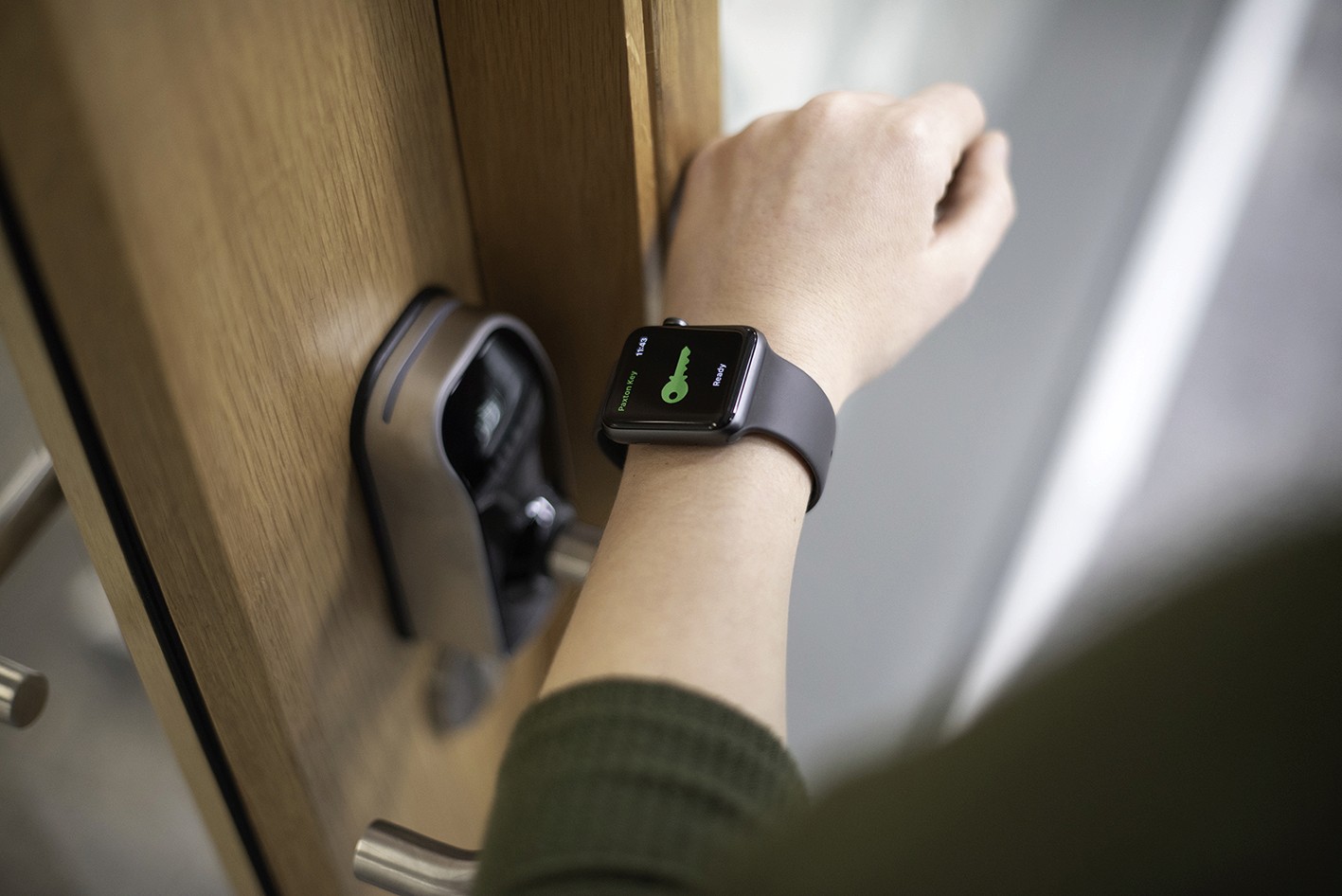
Access control systems that go beyond keys and fobs. Platforms like Paxton enable businesses to manage entry permissions across teams, sites and timeframes, with full visibility of who is accessing what, and when.
Intruder alarm systems that integrate with wider monitoring, providing immediate alerts and rapid response. Technologies from providers such as Ajax and Pyronix offer reliable detection, remote management and real-time notifications that keep businesses informed wherever they are.
Individually, these are strong systems. When integrated properly, they create something far more valuable.
The power of integration
One of the most common issues in business security is fragmentation. CCTV sits on one platform. Access control on another. Alarms operate separately again. Each part works, but none of it connects. That creates friction:
slower response times
limited visibility
more manual intervention
When systems are integrated, everything becomes simpler and more effective.
Access events can trigger camera recordings.
Alarm alerts can be verified visually in seconds.
Activity across multiple sites can be monitored from a single interface.
Instead of managing systems, you’re managing outcomes.
Different environments, same requirement
While the specifics vary, the underlying requirement is consistent across sectors.
Offices need controlled access to protect staff and sensitive areas
Warehouses and industrial sites require perimeter security and full-site visibility
Retail environments depend on theft prevention and customer activity monitoring
Multi-site businesses need consistency across every location
In each case, the goal is the same. Clear visibility. Controlled access. And the ability to respond quickly when something changes.
Security as an operational tool, not just protection
There’s also a shift happening in how businesses view security. It’s no longer just about preventing worst-case scenarios.
Modern security systems provide insight into how spaces are used, how teams move, and where risks exist. They help identify patterns, reduce internal vulnerabilities, and improve overall awareness of day-to-day operations. In that sense, security becomes part of how a business runs, not just how it protects itself.
Where most businesses should start
For many organisations, the answer isn’t to replace everything. It’s to step back and understand where the gaps are.
Where is visibility limited?
Where are systems disconnected?
Where are responses slower than they should be?
From there, improvements can be made by aligning existing systems, upgrading where necessary, and ensuring everything works together. Often, the biggest gains come from integration, not replacement.
A final thought
Most UK businesses don’t have no security. They have security that “just about works”. And that’s where the risk sits.
Because when something does go wrong, it’s rarely a complete failure. It’s a small gap that was never noticed, or a delay that didn’t seem important at the time.
Effective business security isn’t about reacting better. It’s about seeing clearly, acting quickly, and removing uncertainty before it becomes a problem. And once that’s in place, security stops being something you worry about. It becomes something you rely on.

Company NUMBER: SC 669543