“Most businesses don’t realise how much opportunity is lost between the first ring and the first response.” - James Kane, Director at Target Communications.
There’s a tendency to think of phone systems as infrastructure. Something that needs to exist, but not something that actively contributes to growth. As long as calls come in and people can answer them, the job is done. Or at least, that’s the assumption.
In reality, your phone setup sits right at the front of your business. It’s often the first interaction a customer has with you. And in many cases, it’s where opportunities are quietly won or lost.
Not dramatically. Not in ways that show up on a report. Just in small, consistent moments that compound over time.
When “It Works” Isn’t Good Enough
Most businesses don’t have a broken phone system. They have one that technically works, but doesn’t perform.
Calls ring too long. They land with the wrong person. They get missed during busy periods. Or they’re handled without context because the system isn’t connected to anything else.
None of these feel like major issues in isolation. But together, they create friction at the exact moment someone is trying to engage with your business. And that’s the part worth paying attention to.
Because when someone picks up the phone, they’re already interested. The hard part has been done. What happens next should be straightforward. Too often, it isn’t.
The Hidden Loss Most Businesses Don’t Measure
You won’t see this in your accounts.
There’s no line item for:
missed first impressions
delayed responses
poor call routing
or conversations that never quite convert
But it shows up in other ways.
In leads that don’t progress.
In customers who “go quiet”.
In teams that feel busier than they should be without clear results to match.
And crucially, in the opportunities that go to the business that simply responded better. Not bigger. Not cheaper. Just easier to deal with.
Phones Aren’t Just Phones Anymore
The biggest shift in recent years isn’t the hardware. It’s what phone systems are expected to do.
A modern cloud-based setup is no longer just about making and receiving calls. It sits alongside your wider business systems and, when done properly, connects directly into how you operate day to day.
That means:
Calls can be routed intelligently based on availability, department or time of day
Teams can answer from anywhere, whether they’re at a desk or on the move
Customer information can be surfaced instantly through CRM integrations
Call volumes can be managed through contact centre functionality during peak periods
It’s less about the device, and more about the flow.
That’s where many older setups fall short. They were built for a static environment. Modern businesses aren’t static.
The Mobile Piece Most Businesses Underestimate
There’s also the question of where your team actually works.
For many businesses across Scotland and the wider UK, work doesn’t happen in one place anymore. Staff move between offices, sites, home and everywhere in between.
If your mobile setup sits separately from your phone system, you’re effectively running two disconnected communication channels.
That leads to:
calls being missed or duplicated
inconsistent customer experience
and a lack of visibility across the business
When mobile and telephony are properly aligned, the experience becomes seamless. Calls follow the person, not the desk. Customers don’t notice the difference, and internally, everything feels more joined up.
Providers like O2, Vodafone and EE have made that connectivity more reliable than ever. The difference now is how businesses choose to integrate it.
Connectivity: The Bit That Quietly Holds It All Together
None of this works without reliable connectivity. It’s the least exciting part of the conversation, but arguably the most important. A cloud phone system is only as good as the connection behind it. Poor broadband leads to dropped calls, poor quality and frustrated customers.
This is where solutions like FTTP, leased lines and even Starlink come into play, depending on location and requirements. For rural parts of Scotland in particular, having flexible options matters. The goal isn’t just speed. It’s consistency.
Because when your communication depends on the cloud, stability becomes non-negotiable.
The Role of Hardware (Still Matters More Than People Think)
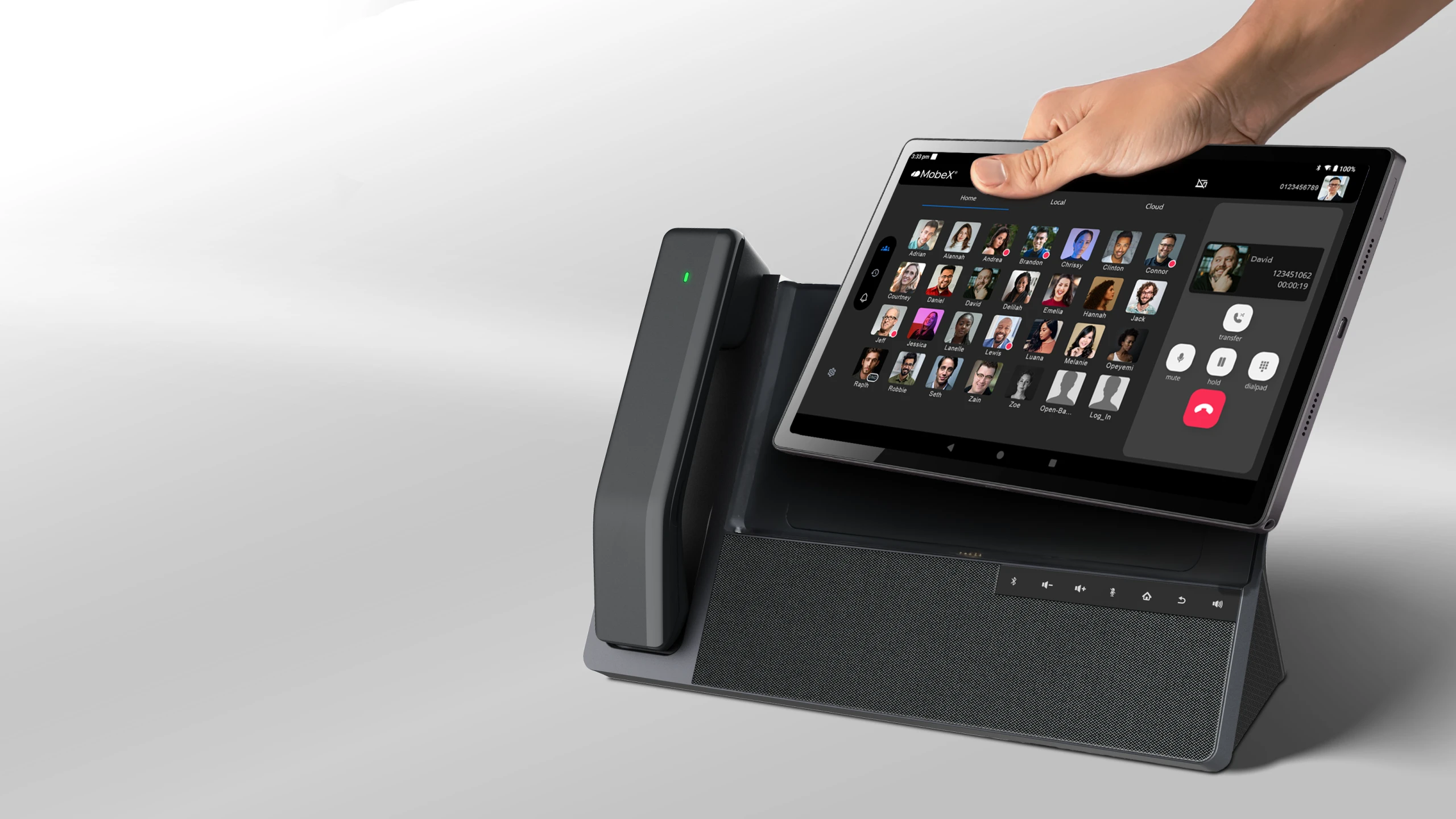
While much of the conversation has moved to software and cloud systems, hardware still plays a role. Devices from providers like Yealink, Poly and Fanvil aren’t just about aesthetics. They influence call clarity, usability and how easily teams adopt new systems.
A poor handset experience slows people down. A good one disappears into the background. It’s a small detail, but like everything else in this space, small details tend to stack.
What Better Actually Looks Like
When it’s done properly, your phone system doesn’t feel like a system at all.
Calls are answered quickly and by the right people. Teams can work from anywhere without thinking about it.
Customer information is available when it’s needed. And the entire process feels… smooth.
There’s no chasing. No confusion. No unnecessary steps. Just a business that’s easy to get hold of and easy to deal with. And in most industries, that alone is a competitive advantage.
A Final Thought
Most businesses don’t lose customers because they don’t offer a good service. They lose them in the moments before that service even begins.
A missed call. A slow response. A slightly awkward interaction that didn’t need to be. Your phone system sits right in the middle of those moments. Not as a cost. Not as a utility.
But as one of the simplest ways to make your business feel sharper, faster and easier to work with.
And in a market where most companies are still operating with setups that “just about work”, that’s often all it takes to stand out.

Company NUMBER: SC 669543